The Order
An Order Older Than the Word “Lodge”.
Mission
Why the Order Exists
We reclaim the initiatic science of the Nile Valley — the graded instruction of Kemet (ancient Egypt), taught in its own names, from its own sources, without apology and without borrowing another people's authority to validate it.
We form Brothers and Sisters in Ma'at. Character is the first course of study; the heart is weighed before the mind is trusted with anything of consequence.
We build — in the world and in the self. A Temple that produces no work in its city has not understood the trowel it was given.
What the Order Teaches
The Temple Was the First Lodge
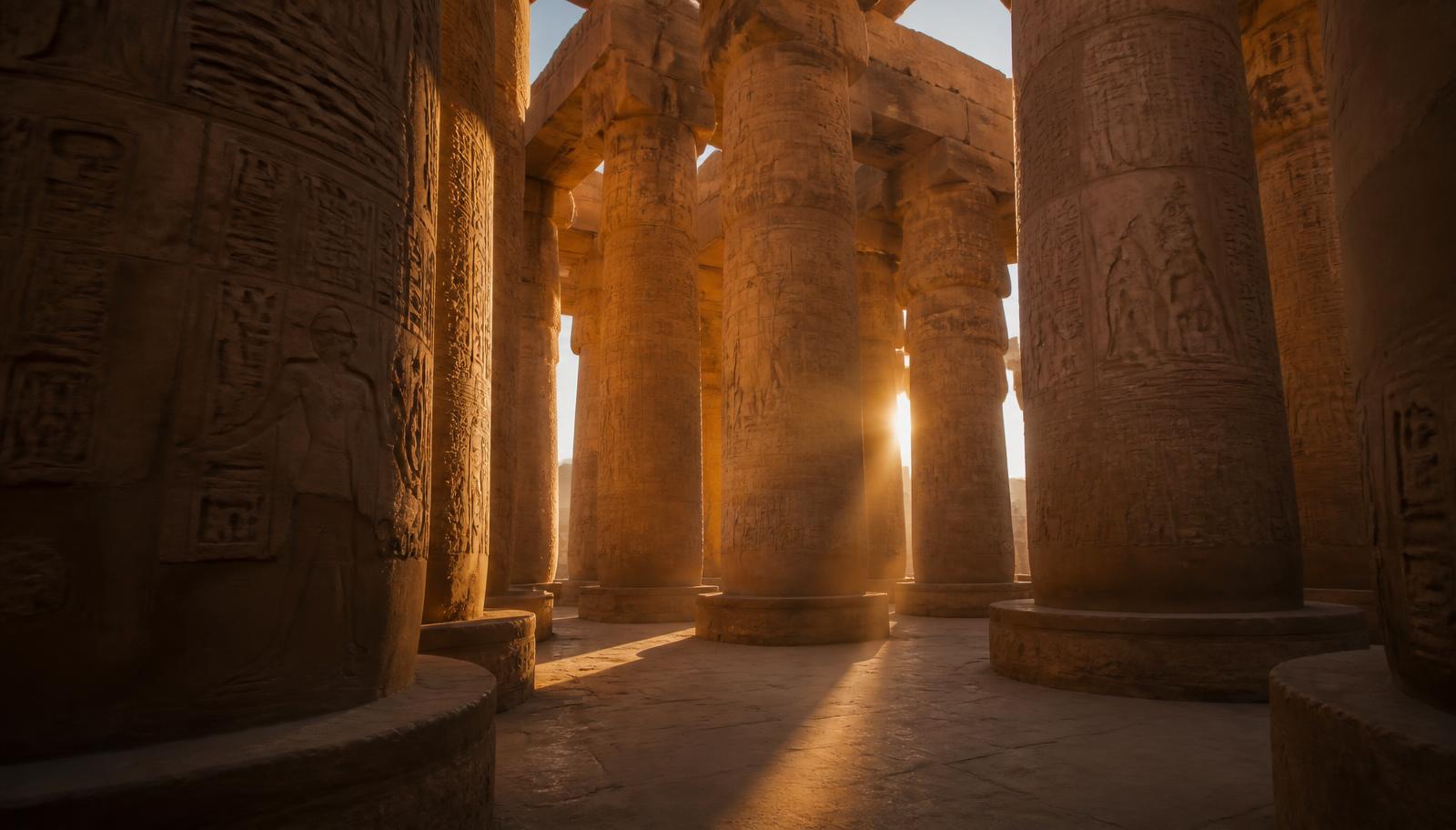
Ipet-Isut (Karnak) at Waset — the Temple of Amen Ra — is the Mother Temple of this tradition. Its courts, its hall of columns, and its inner sanctuary set the pattern of graded approach that every later Craft inherited.
The Order carries the tradition of the Grand Lodge of Luxor, the instruction given at Waset to those judged prepared to receive it, Africans first among them.
Under the Kushite 25th Dynasty the priesthood of Amen was restored, and Nubian kings rebuilt what had been neglected — evidence that this light has been recovered before.
The Craft was carried into the Americas through Prince Hall and African Lodge No. 459, and taught again in our own century through the scholarship of Dr. Ben, who restored the teaching to its Nile Valley source.
The Order teaches that the word sealed on every prayer — Amen — carries the name of the Hidden One of Kemet.
Timeline
How the Light Traveled
c. 3800 BCE
Ta-Seti / Nubia — the first Nile Valley kingdom and its shrine culture.
c. 3100 BCE
Unification of the Two Lands; the double crown and the doubled pillar.
c. 2650 BCE
Imhotep raises the Step Pyramid at Saqqara — the first Grand Architect.
Middle & New Kingdom
The Temple of Amen at Ipet-Isut (Karnak) rises at Waset.
c. 750 BCE
The Kushite 25th Dynasty restores the priesthood and worship of Amen.
c. 600–350 BCE
Greek students study in the temples of Kemet (ancient Egypt).
332 BCE
The Ptolemies take Kemet; the temple schools begin to close to Africans.
391 CE · c. 537 CE
Temples closed by imperial edict; Philae, the last, is silenced.
1717
London — the Craft is organized as speculative Masonry.
1784
African Lodge No. 459 — Prince Hall returns the Craft to African hands.
20th century
Dr. Yosef Ben-Jochannan teaches, writes, and leads study tours to Kemet.
2026
The Craft of Amen Ra — the path restored at its source.
Officers of the Temple
Who Holds the Work
| Office | Charge |
|---|---|
| Grand Master | Head of the Order. |
| Hierophant of the East | Presides over a Temple. |
| Warden of the West | Keeps the work and the roll of the Temple. |
| Warden of the South | Keeps the hours and the instruction. |
| Scribe of Tehuti | Secretary; keeper of the written record. |
| Keeper of the Treasury | Steward of the Temple's means. |
| Priest / Priestess of Ma'at | Chaplain; keeper of the Declarations. |
| Bearers of the Was | Deacons; carry word and office through the Temple. |
| Guardian of the Pylon | Keeps the outer door. |
The Widow Sons of Ra
The Son of the Widow
Heru (Horus), son of the widow Auset (Isis), is the archetype of the initiate: born into loss, charged with restoring what was broken, and made whole only through the work. The Widow Sons of Ra is the Order's study circle, addressed by Grand Master Dr. Jabade Powell in Detroit.
The Standard
The Seven Principles of Ma'at
Truth
What is real is spoken plainly, without ornament.
Justice
Each is given what is due, without favor.
Harmony
Difference is arranged, not erased.
Balance
No faculty is fed at the cost of another.
Order
Work is done in its proper season and place.
Reciprocity
What is received is returned and increased.
Propriety
Conduct fits the moment, the place, and the company.